
PRODUCT
PolyFlex
Diffusers
The elegant way to improve soundstage, tonality, and clarity while eliminating echo and reflections.
Why Diffusion
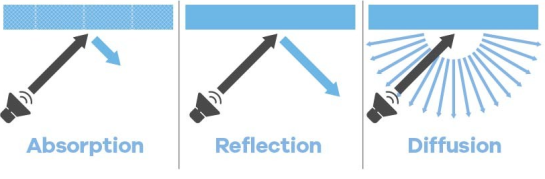
Frequency and spatial irregularities are especially problematic in small rooms such as recording studios and listening rooms. Adding diffusion to the room is almost always beneficial. Acoustic diffusion is used to remove hard, specular room reflections that interfere with the direct sound of the loudspeakers, and to enhance the environment by making it sound larger, more articulate and/or lively.
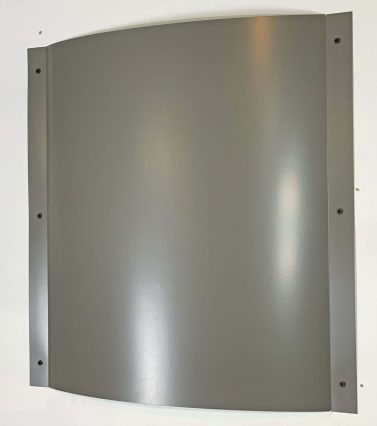
PolyFlex Diffusers are 1D diffusers, meaning they will scatter either horizontally or vertically, depending on orientation. Combine both for full hemispheric scattering. Available in a 100% clear Polyethylene Terephthalate Glycol (PETG), or a dark neutral grey (as shown) paintable 20 gauge metal with a damping sheet applied to the back to eliminate resonance.
PolyFlex Diffusers Acoustic Performance
Number theory diffusers are expensive and difficult to build. They are also very limited in performance. For example; common QRD or skyline-type diffusers are diffractive diffusers. The different length wells or blocks reflect at different phase points. This phase scrambling removes localization. They are also typically limited to 4kHz. - 16kHz.
If a skyline-type diffuser uses blocks that have a 2" reflective face, it can only reflect wavelengths that are smaller than that dimension, meaning it is only effective down to about 6.7kHz. It will also block itself to sound sources and receivers that are off-axis, is ineffective when too close to a receiver, and if one dimension is slightly off in build or calculation, it doesn't work at all!
PolyFlex Diffusers are very effective at dispersing sound and remains phase coherent. They offer wider frequency bandwidth, and smoother and wider off axis scattering than any other type of diffuser. They also have no minimum seating distance (convergence point), as do grating number-theory (well or skyline) type diffusers.
A single PolyFlex Diffuser can be used at a single listener reflection point, or multiple diffusers can be used to cover larger listening areas.
Multiple PolyFlex Diffusers- It is good practice, when using polycylindrical diffusers, to avoid mounting four or more together with the same orientation, depth and spacing. Doing so can create repeated constructive and destructive energies at particular frequencies (lobing). Changing the spacing, depths and/or orientations will prevent such conditions.
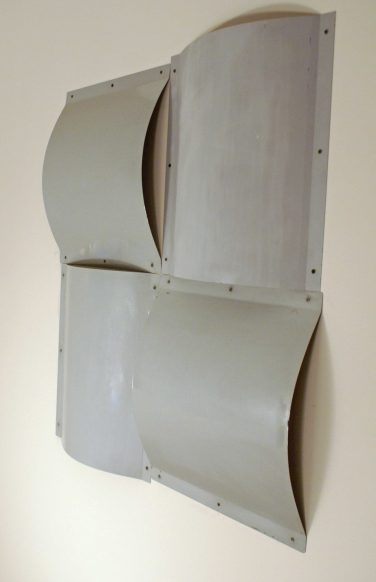
The above configuration of four PolyFlex Diffusers can offer 2-D hemispheric scattering. This job shows them primer-painted to be concealed with our FRP stretch-fabric panel system.
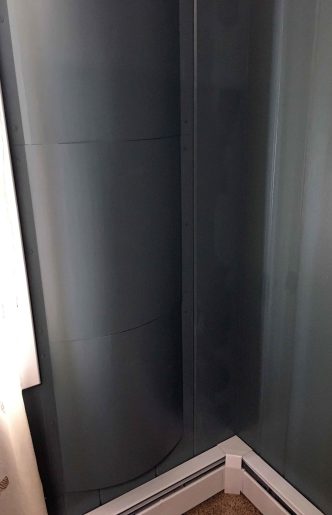
Painted PolyFlex Diffusers mounted near corner and behind
floor standing electrostatic loudspeakers
PolyFlex Diffuser can easily be fastened on walls and ceilings using drywall screws. They can also be concealed under stretch-fabric systems. They are typically used to control first order reflections, enhance surround sound envelopment, control flutter echoes, and/or to add more aural openness and sparkle to the space.
PolyFlex Diffusers can add sonic spaciousness to the room, air around the instruments, timbre accuracy and/or widen the soundstage. They also improve clarity in speech and spatial focus without making the room sound dead and/or small. PolyFlex diffusers can also be used at reflection points in place of typical absorbers when room reverberation times are already low. Once the reverberation times of the room are under control, it would be very difficult to have too much diffusion added to the room.
- Adjustable 2”-4” depth for randomization (no frequency lobing), or fine-tuning
- Minimum uniform dispersion of 150° of horizontal or vertical scattering (wider than any other type)
- Effective from about 630 Hz. and up (broad frequency bandwidth and no high frequency limit)
- No high frequency limit, even when off-axis (never casts a shadow upon itself)
- Effective even at 90 degrees off axis
- No theoretical listening distance required (as number-theory type diffusers have)
- Remains phase coherent, unlike number-theory diffusers.
- Though the PolyFlex is a pure diffuser on its own, the open sides can be loosely filled with insulation to add absorption properties
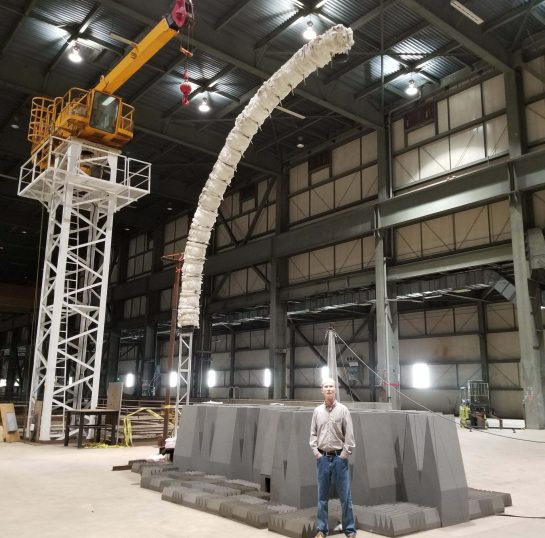
Norman Varney testing our diffusers at the NWAA Diffusion Test Lab
PolyFlex Diffuser Specs
EC Version Available in Four Colors and are 3.5"x5"x1"
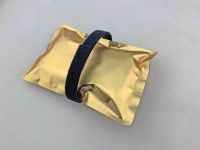
Gold
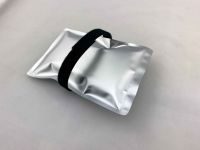
Silver
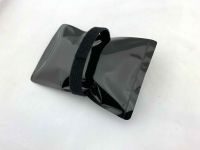
Black
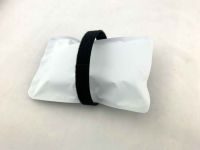
White
EI Version Available in Two Sizes-3.5"x5"x1", and 2.5"x4"x1":
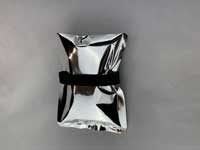
El
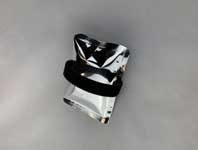
El Mini
Reviews

"... cable risers don't really address the inherent problems faced by cables simply lying on floors, and especially don't do anything for vibrational and electromechanical issues. "
"AV RoomService CVP-ECs: Cable Vibration Protection for a Lower Noise Floor"
11-12-2019 | By Tom Gibbs | Issue 106
"I have spent many years attempting to improve how my speaker and power cables perform after noticing that I could get a temporary improvement by lifting cables off the floor and letting them rest down. This indicated EMI/RF and/or microphonic interference was impacting my cables. I have tried both proprietary and home-made cable risers and found limited improvement until I purchased and installed CVPs."
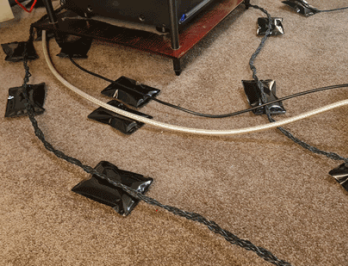
"Wow - the improvement is huge. The noise floor of the system has dropped markedly, as well as bass, microdynamics, image depth/width have all improved. Don't be put off by the humble look of these CVPs... they are absolutely outstanding and come highly recommended if your looking to get the best out of your system."
2022 | By Andrew C. | Australia