ACOUSTICS
Acoustic
Case
Studies
Real-world examples of challenges, solutions, and measurable results. Each one offers a closer look at how we’ve helped clients overcome obstacles, achieve their goals, and create lasting impact.
(Tap on any study below to read more)


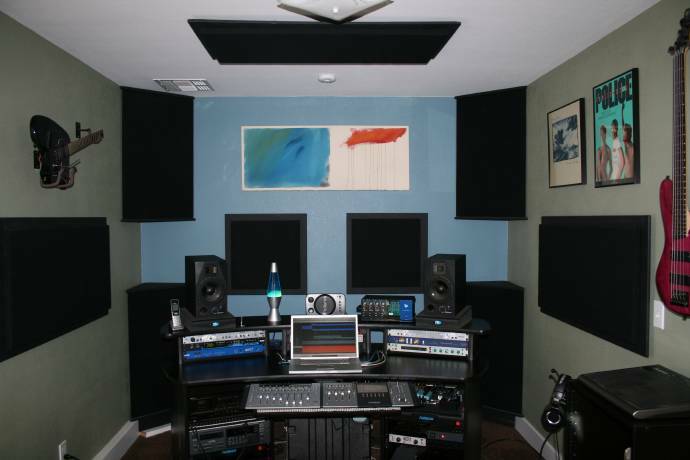

INNOVATIVE
Cinema Acoustic Upgrade
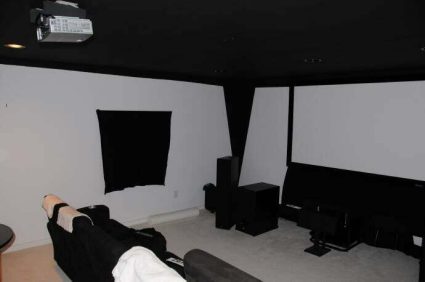
Before
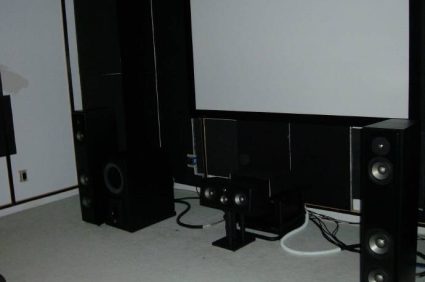
During

After
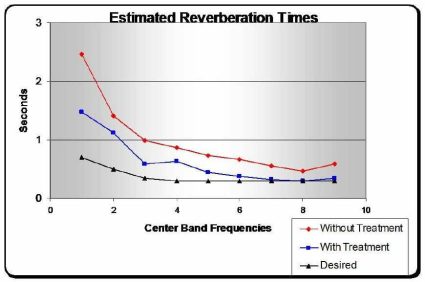

Estimated Reverb Times
(click on chart to expand)
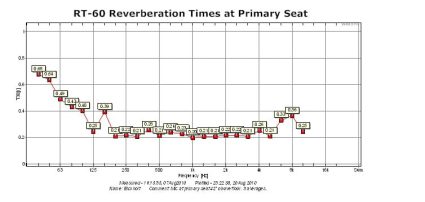
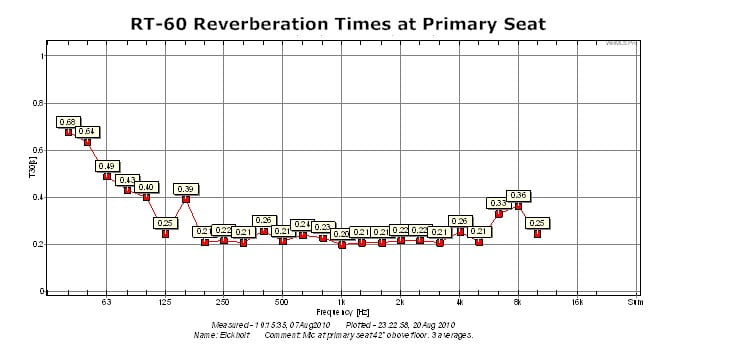
Actual Reverb Times
(click on chart to expand)
FREQUNCY RESPONSE
High-end Cinema Extension
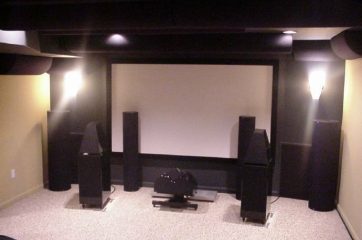
Prior to Acoustic Treatment
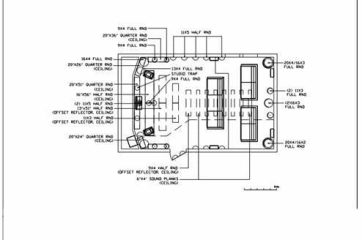
Prior to Treatment Layout
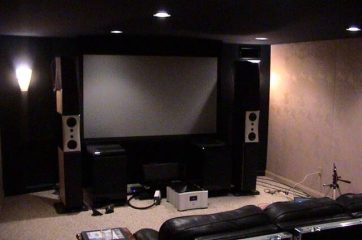
Finished FRP System
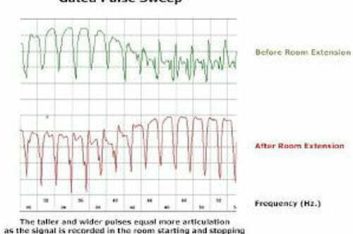
Bass slurring elimiated
(click on chart to expand)
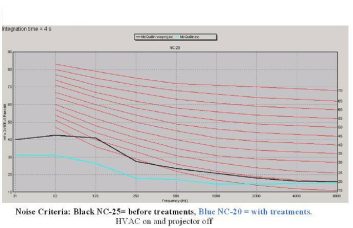
HVAC moise floor lowered
(click on chart to expand)
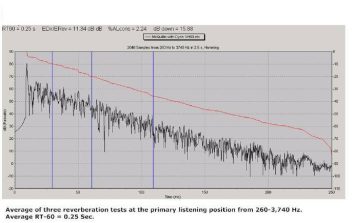
Reverberation times controlled
(click on chart to expand)
Reverberation is probably the most recognized characteristic of a room’s sound. Reverberation is the acoustic energy in the space that lingers on after the sound stimulus has been removed. Each room’s reverberation times at each frequency are as unique as a signature. Ideally, we want the reverberation times to decay at the same rate across the audible bandwidth, and within a time window of about 0.25 - 0.35 sec. This allows for neutral sound conditions. An exception is for frequencies
below about 100 Hz., where we need slightly longer decays in order for our brain to make sense of the difference between what our ears hear vs. what our eyes see. Lack of reverberation control results in masking of low-level details, loss in dynamic range, soundstage, timbre and articulation.
REVERBERATION TIMES
High-end Showroom Re-design
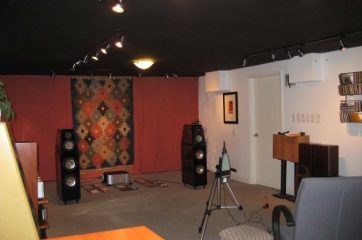
Prior to Acoustic Treatment
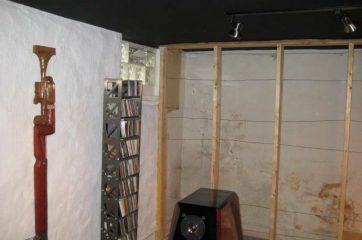
Prior to Treatment Layout
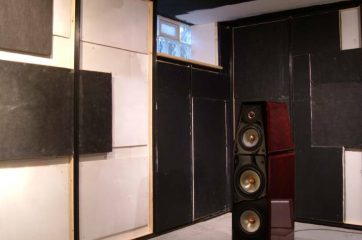
FRP before fabric
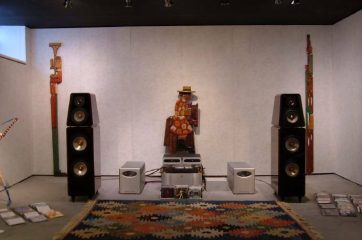
Finished FRP
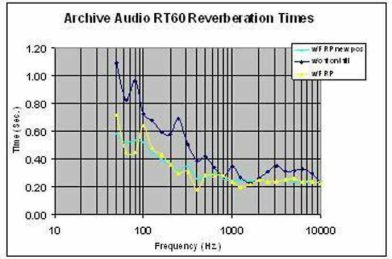
Before and After Reverb Times
(click on chart to expand)
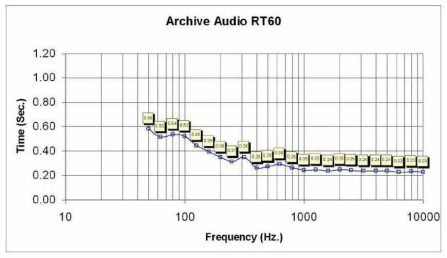
Actual Revernb Times
(click on chart to expand)
Reverberation is probably the most recognized characteristic of a room’s sound. Reverberation is the acoustic energy in the space that lingers on after the sound stimulus has been removed. Each room’s reverberation times at each frequency are as unique as a signature. Ideally, we want the reverberation times to decay at the same rate across the audible bandwidth, and within a time window of about 0.25 - 0.35 sec. This allows for neutral sound conditions. An exception is for frequencies below about 100 Hz., where we need slightly longer decays in order for our brain to make sense of the difference between what our ears hear vs. what our eyes see. Lack of reverberation control results in masking of low-level details, loss in dynamic range, soundstage, timbre and articulation.
NOISE ISOLATION
Home Recording Studio
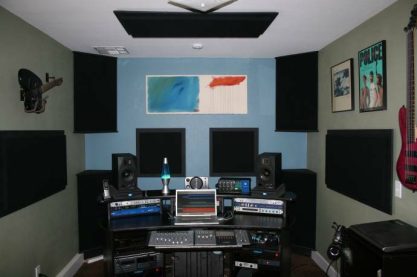
Studio Front
(click on chart to expand)
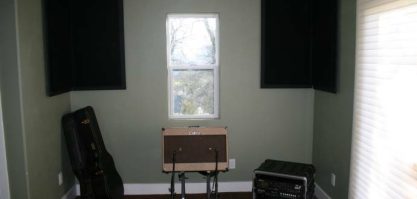
Studio Rear
(click on chart to expand)

Room Layout
(click on chart to expand)

Estimated Room Modes
(click on chart to expand)

Estimated Reverberation Times
(click on chart to expand)
NOISE TRANSMISSION
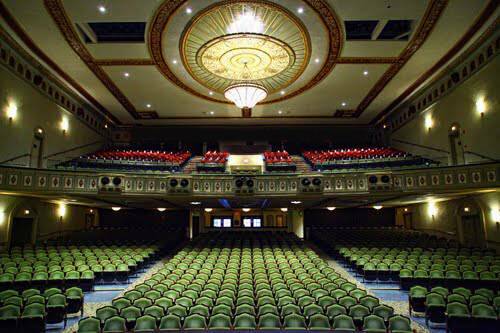
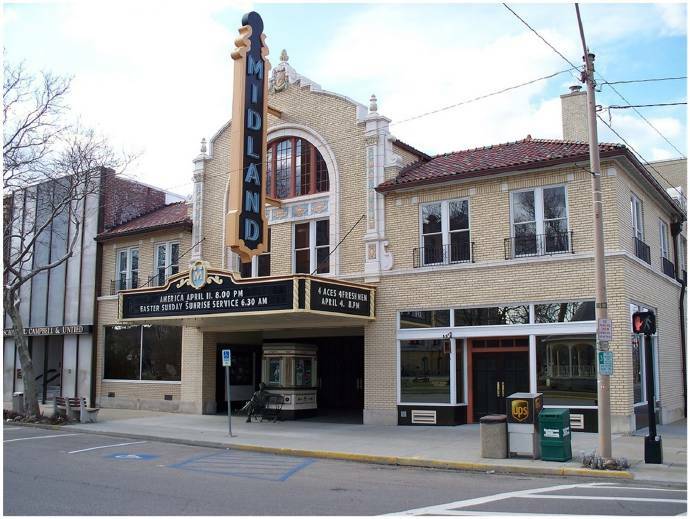
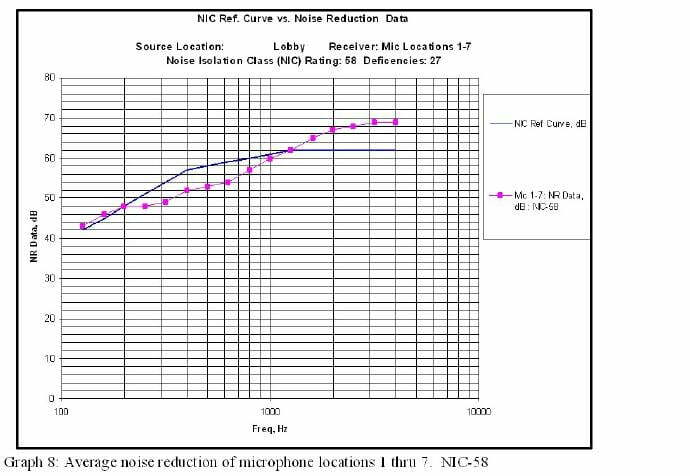
Law Office vs. Community Theater Noise
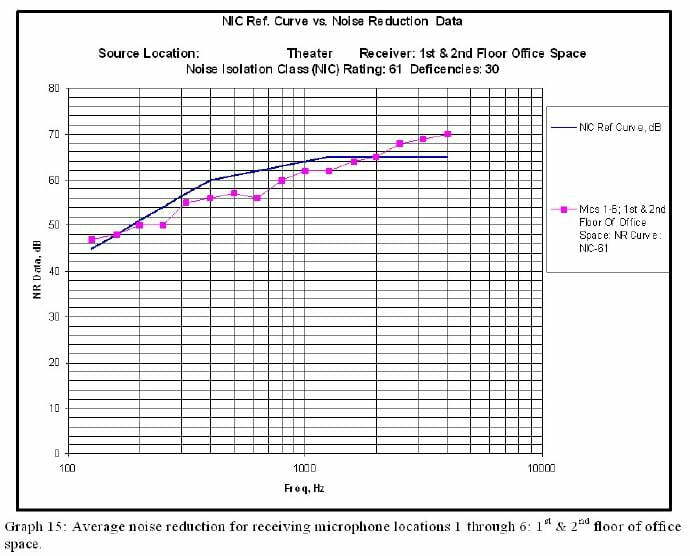
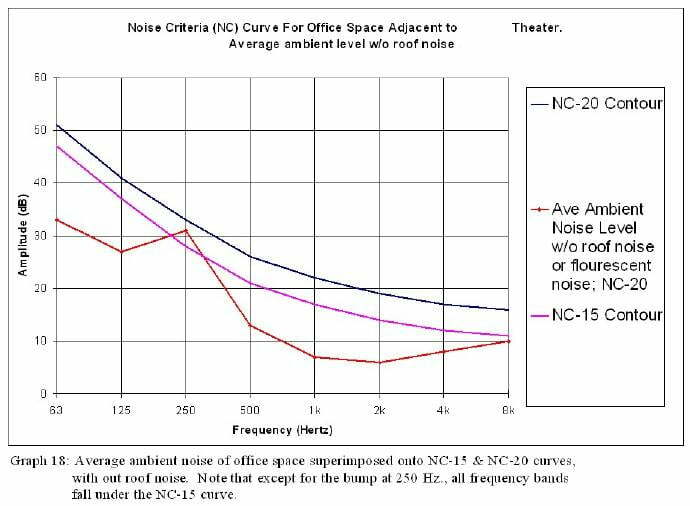
Test 2: The average NIC value based on 6 microphone locations over the 1st and 2nd floors indicated a NIC value of 61. (See graph 15) Again, this performance level is considered to be at an acceptable level for this type of theater separation wall construction. Again, the projected STC levels for NIC ratings of this magnitude would be expected to achieve STC rating from the low to high 60’s. As was noted above, no wall is soundproof and will transmit noise through it relative to the noise levels and frequencies being generated on the opposite side. A wall of this performance level, as with the lobby wall, is expected to adequately attenuate most generated noise levels from the theater. However, there will be times when high level mid frequency noise and low frequency noise achieve a decibel level which will penetrate the wall and be heard in the business space. The principle to understand is that annoyance levels, while significantly reduced, cannot be eliminated. For example, a poor noise control wall may have an annoyance level of 75%, while a high performance wall construction only 10%. Both walls will have potential complaints, but the quieter wall will have overall fewer complaints.
Test 3: This test looked at the noise reduction levels associated with the double doors separating the main theater seating area from the lobby on the 2nd floor. No sound gaskets were noted on the doors and as a result achieved a NIC rating of 22. (See graph 16.) The noise reduction curve indicates significant reductions in the mid to high frequency range which would indicate that the lack of door seals are limiting the doors ability to reduce noise transmission. As a result noise levels from the main theater to the lobby would be expected to be elevated due to this condition.

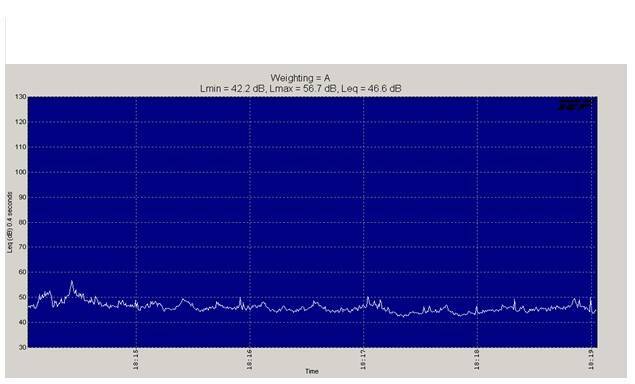
Test 4: During our recording of noise in the adjacent office space, it was observed that intermittent noise was coming from the roof area. While the exact location and source of this noise could not be identified, a noise spectrum of the noise was taken when it was noticeably on and off. The comparison of these two spectrums indicate increase noise levels indicative of motor harmonics. This spectrum indicated increase ambient noise levels at 80 and 160 hertz as noted on graph 17. After a quick investigation, we did note that the new HVAC generators for the theater were mounted directly to the rooftop with no type of isolation system in place.

FURNITURE INTERFENCE
Resonating Cinema Seats
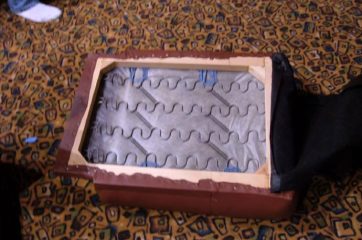
Seat prior Treatment
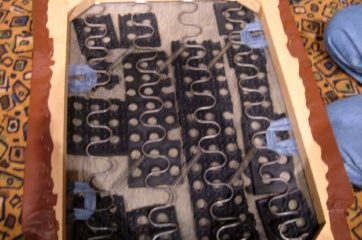
Seat after Treatment
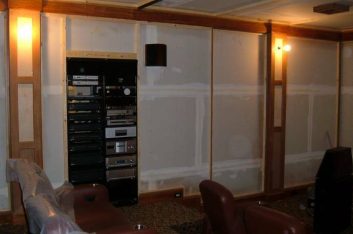
Prep for FRP acoustic treatment
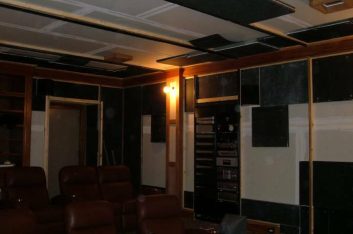
FRP before fabric
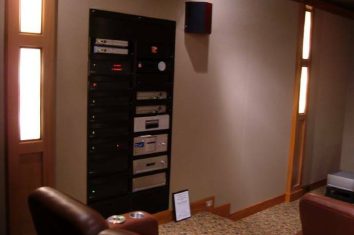
Finished FRP
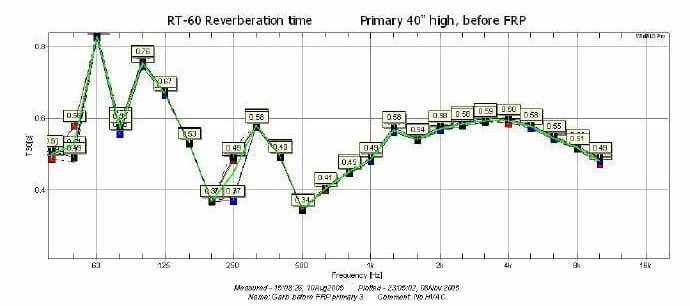
Unique room reverberation time signature before FRP acoustic treatment
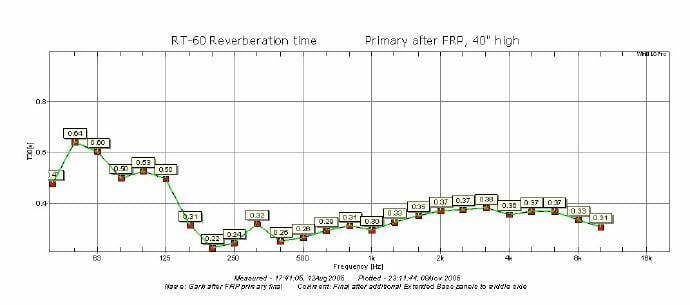
Controlled reverberation time signature after FRP acoustic treatment
Reverberation is probably the most recognized characteristic of a room’s sound. Reverberation is the acoustic energy in the space that lingers on after the sound stimulus has been removed. Each room’s reverberation times at each frequency are as unique as a signature. Ideally, we want the reverberation times to decay at the same rate across the audible bandwidth, and within a time window of about 0.25 - 0.35 sec. This allows for neutral sound conditions. An exception is for frequencies below about 100 Hz., where we need slightly longer decays in order for our brain to make sense of the difference between what our ears hear vs. what our eyes see. Lack of reverberation control results in masking of low-level details, loss in dynamic range, soundstage, timbre and articulation.
SPEECH INTELLIGIBILITY
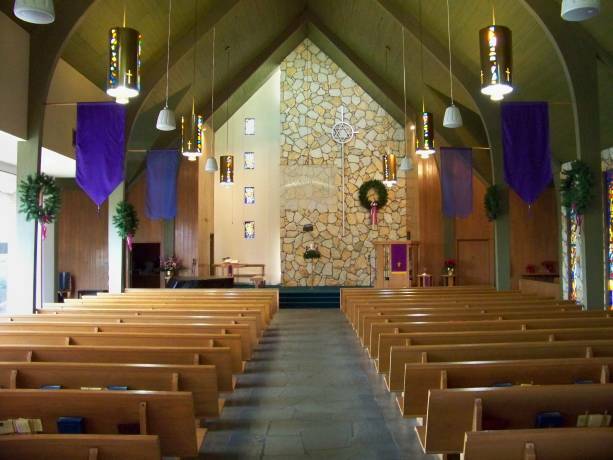
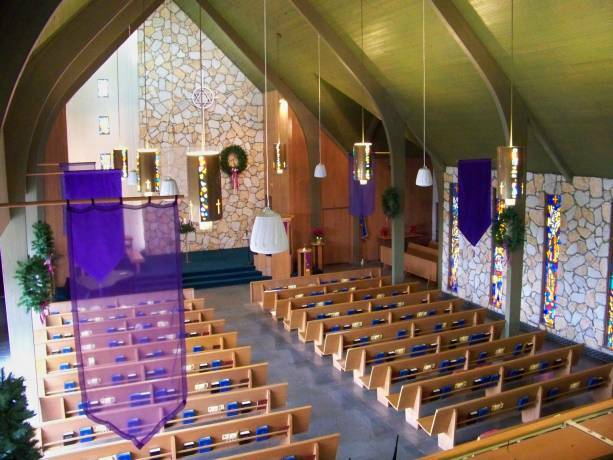
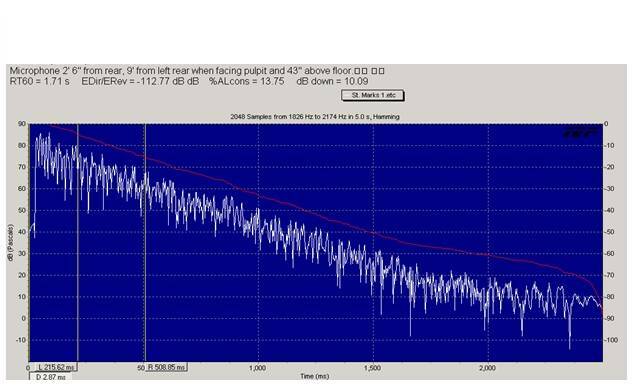
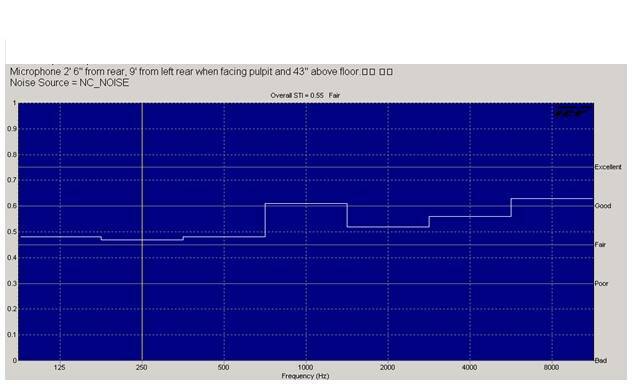
House Of Worship Case Study