
PRODUCT
EVP Equipment Vibration Protectors
The easiest, least expensive, and most effective way to control unwanted vibrations
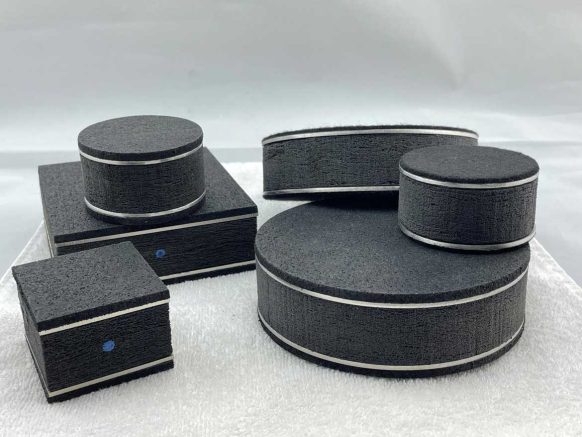
Why you need EVP Protectors
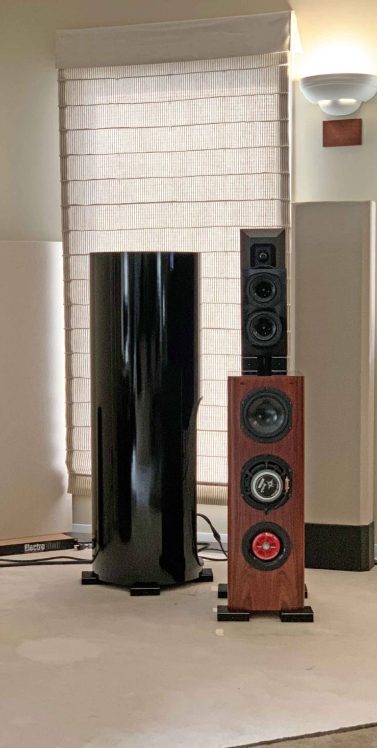
Improves Sound Quality and Noise Control
Clarity, dynamics, timbre and soundstage are all improved because mechanical resonances and vibrations are eliminated from the electronics, the loudspeakers, and the building structure.
Reduces Sound Transmission
Vibrations are not transferred to the building structure for others to hear. In addition, the listening space no longer rings of resonances, and buzzes and rattles cease.
Lab Tested
Found to conservatively eliminate vibrations to and from equipment from 5 Hz. and above by more than 90%.Standard EVPs have a natural frequency of 3-4Hz. in the specified operating load range.
Different Sizes for Different Jobs
Too little or too much deflection will not decouple energy transfer. EVPs come in different densities and sizes to "float" the weight of your equipment properly. Custom EVPs are also available.
How to choose the right EVP
Too little or too much pad deflection will not work to decouple energy transfer. When the equipment weight is properly loading the EVP, the pads will compress some, but not fully, allowing the equipment to float. When properly loaded, the EVP will evenly compress about 10 – 30%. Following the steps will insure proper deflection and performance.
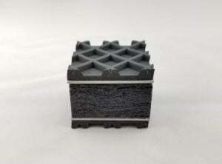
Small Rubber Square
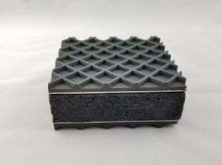
Large Rubber Square
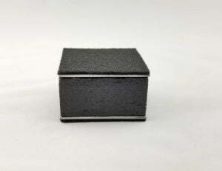
Small Felt Square
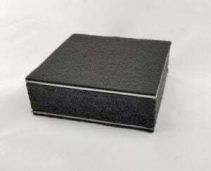
Large Felt Square
Small Rubber Round
Large Rubber Round
Small Felt Round
Large Felt Round
STEPS:
- Determine the weight of the equipment to isolate
- Enter weight into EVP Calculator (below) and select Pounds or Kilograms.
- Decide on Small or Large amd (4" EVP.
- Decide on number of EVPs (3, 4 or 5)
- Determine proper EVP density (MEDIUM or HIGH)
- Choose between RUBBER OR FELT.
- Place order
Choosing between our round and square EVPs comes down to simply whichever looks best with your equipment. The audio performance and material surface area is identical with both shapes, and you can use our calculator for loading and can even mix and match shapes.
EVP CALCULATOR
Enter Weight and Select either Pounds or Kilograms button:
2” vs. 4”: Generally 4” EVPs should be selected for subwoofers and full-range speakers (offering more material to do more work), and/or when you need the stability, or the load handling. 2” EVPs work for most electronics. More than four EVPs can be utilized.
Different Density Options: When given the option, select the higher density EVP, only because they are less fragile, while offering the same performance.
Rubber vs. Felt Finish: Same performance. Generally, select rubber when you don’t want it to move, i.e. under floor standing loudspeakers or a guitar amplifier. Note- rubber finish is taller than felt. Select felt when the equipment will be resting on a smooth surface of some kind, allowing you to easily slide it into position without scratching the surface.
As with all our products, there are third party standard test measurements backing the claims, along with a 30 day money back guarantee (in original condition) if not satisfied.
If you have any questions, please contact us. We would be happy to assist you!
How EVPs Work
At the core of EVPs are layers of engineered glass fibers acting as leaf-springs. Basically, mechanical energy causes the fibers to move against each other, and the friction converts the mechanical energy into thermal energy. In addition, our own RoomDamp constrained-layer damping compound improves the energy dissipation efficiency. Vibration transfer is a two-way street; vibrations can travel both to and from a source, and/or be reflected back to the source. EVPs allow equipment to perform optimally, quiet the room, and prevent vibrations from being transmitted to adjoining spaces. Extraneous vibrations and resonances are no longer heard, leaving only the pure original loudspeaker signals.
All structureborne vibrations are unwanted vibrations. Only the direct airborne vibrations from the loudspeaker are wanted.
Improves Sound Quality (clarity, dynamics, timbre and soundstage) because resonances and vibrations are eliminated. Floors, walls, ceilings, and furnishings cause unwanted resonances and vibrations to be re-radiated into the room. Vibrations can even cause sonic degradation in electronic components, their connections, laser reading and turntable playback, resulting in data corruption, phase distortions, noise, etc.
Microphony occurs when electrical components receive mechanical energy and convert it into electrical energy, thus distorting the signal. Tubes and phono cartridges are especially susceptible. Crystal oscillators in digital products can be effected by vibrations by changing their frequency slightly, causing timing errors. Turntables are certainly the most sensitive to vibrations, amplifying them over the speakers, sometimes even to the point of feedback. They are also most sensitive to footfalls being picked up and amplified, and even mistracking. Speakers are sensitive to movement of even a single micron. Spikes and couplers allow vibrations to reflect back into loudspeaker cabinets, which can easily vibrate well above this and influence the response.
Improves Noise Control by reducing Sound Transmission to adjacent spaces. This relieves other occupants from being annoyed, as vibrations are no longer transmitted into the building structure.
EVPs have been lab tested and found to conservatively eliminate vibrations to and from equipment from about 5 Hz. and up, by >90%. This is done by converting the mechanical energy into thermal energy. The result is audible from both a sound quality and a noise control point of view.
Standard EVPs are 2″ or 4″ squares by about 1″ tall (approx. 51 or 102 square x 30mm tall). Standard EVPs are black with felt or rubber top and bottom. Standard EVPs typically ship within 1-2 business days of ordering.
Custom size and density EVPs for heavy equipment, racks, pianos, etc. are available upon request. Custom colors are also available upon request.
In addition, solid feet offer little to no noise control, rather they transfer vibrations directly into the structure and to adjacent spaces by coupling them. This structure-borne energy is not only transferred to connected spaces, but also re-radiated back into the room. The three videos below (and one at bottom of page) demonstrate the EVP effectiveness in an easy-to-understand manor. It also demonstrates how solid feet do not isolate vibrations, rather they directly couple them, attenuating some frequencies while amplifying others, depending on the unique compliance of the whole system. The mechanically plucked tines offer a controlled, repeatable demonstration.
Regardless of the extraneous variables, EVPs offer a neutral, repeatable, consistent, and predictable solution.
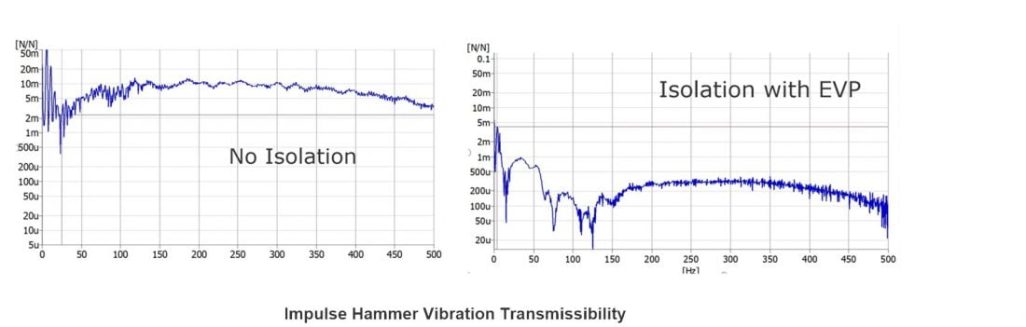
Coupling vs. Decoupling:
To isolate means to decouple. EVPs decouple and “float” resting equipment, while absorbing vibration energy. A proper decoupler must be able to handle the load without compressing too little, or too much, in order to function. EVPs have no natural resonant frequencies in the audible bandwidth. They will even mitigate subsonic frequencies where footfalls and feedback can present problems.
Spikes, blocks and cones are couplers. They act as filters by attenuating some vibrations and amplifying others. Always unique and never neutral. A different sound doesn't always mean it's better. Hard feet couple vibrations to whatever they are touching. Think of a tuning fork handle placed against a shelf. The shelf becomes a soundboard. Rubber type pads are limited in bandwidth and in load handling. They too alter the sound, but not eliminate the problem. Decoupling is the correct solution to preventing vibration transmission and removing resonances.
EVPs are available in three standard densities and two sizes to handle equipment from 3 – 304 lbs. (7.25 – 137.89kg.). They are about 1″ (25.4mm) tall and either 2″ (50.8mm) or 4″ (101.6mm) square, with rubber or felt finish. Custom size and/or density EVPs can be specially made.
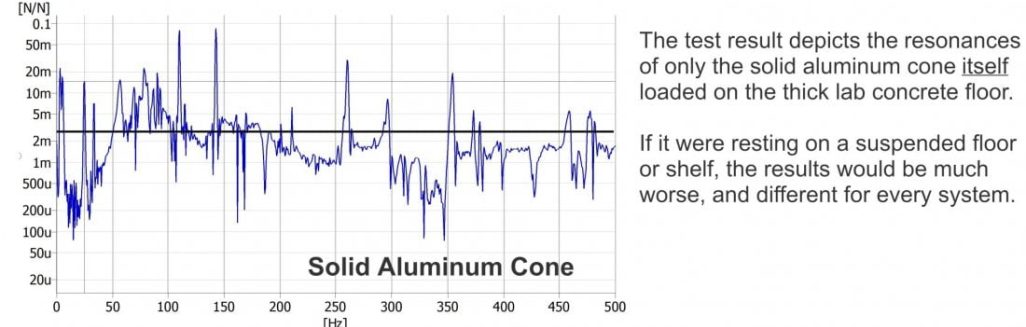
Test 1
Test 2
For reference: The Sound Pressure Level from 1 meter on the glass peaked at 80.3 dBA @15kHz. The SPL on the cone peaked at 82.2 dBA @ 13.5kHz. The SPL on the EVP peaked at 45.5 dBA @ 1.1kHz. Be suspect of claims with no proof, and of “one-size-fits-all” isolators.
note: “NoVibe” shown in the videos was the project name during development. Once the product moved to production status, the name was changed to “EVP”.
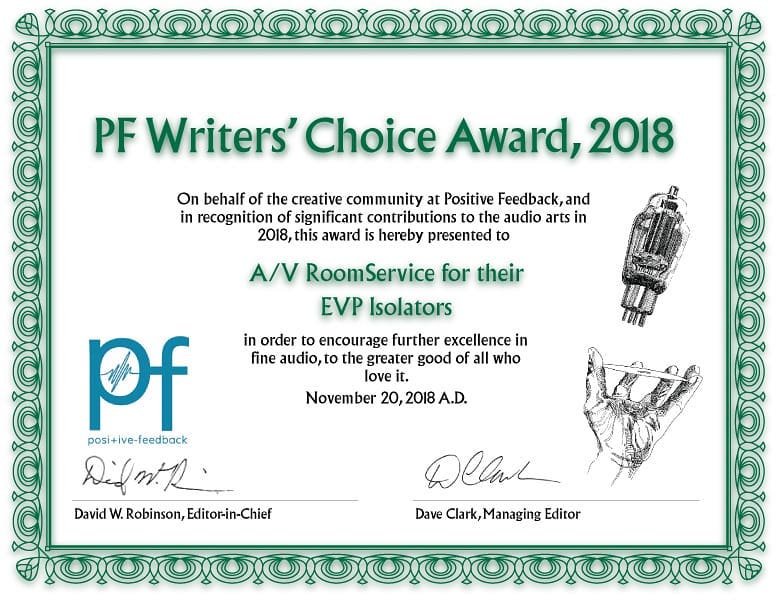
Awards








Whitepapers
Reviews

AV RoomService EVPs (Equipment Vibration Protectors): Outstanding Equipment Isolation for Systems at Any Price Point
09-01-2018 | By Tom Gibbs | Issue 99

Quarter Notes:
I was frankly amazed - especially at the huge improvement from my REL 212 SE subs. Countless audiophiles had said that the bass here was the best, most natural they had heard.
2018 | By Jim Smith
Issue 23
“When AV RoomService’s specially-designed and constructed EVP isolators arrived, I replaced the wood blocks under the Dynaudio MP5 monitors and the difference was “night and day”: The sound not only tightened up, but it became quieter. I highly recommend EVPs. They are the real deal. Norman is the real deal. Everything he designs is based on science, there is no voodoo here, and this science has served to truly improve my sound.”
Bob Katz
Mastering Engineer
3 time Grammy winner
“I’ve been happily using prototypes of the EVPs for almost a year. Since placing them under my guitar cabinet, they have not moved. I found the improvement in tone to be readily apparent – a tightening up in the low end and a more focused and clearer tone overall. I won’t record my guitar without them!”
Matt McCabe
guitarist of King Never
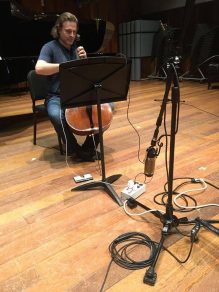
EVPs shown under microphone stand of a Michael Bishop recording session
“Very effective"
Michael Bishop
Recording Engineer
winner of 10 Grammy Awards
Wow...I am speechless. This is not a placebo effect, I know my room and monitoring very well and this is the BEST upgrade I did so far. Tighter bass and the stereo imaging is much more precise and the center is SPOT ON! Your product is simply the BEST. I have tried 3 or 4 different decoupling products in the last 20 years (and not cheap $) but the EVP’s are astonishing! Wonderful! Thank you!”
All the best,
Richard Addison
Trillium Sound Mastering